August 7, 2026
  admin
admin Industries generate hazardous waste every day. Safe disposal is essential for protecting people, equipment, and the environment. Therefore, a Hazardous Waste Incinerator has become one of the most reliable solutions for handling dangerous industrial waste.
Modern hazardous waste incinerators destroy harmful materials at high temperatures. As a result, they significantly reduce waste volume while minimizing environmental impact. Industries such as pharmaceuticals, chemicals, petrochemicals, manufacturing, and healthcare rely on these systems to meet strict environmental standards.
A Hazardous Waste Incinerator is a high-temperature thermal treatment system. It safely burns hazardous waste under controlled conditions. Consequently, toxic substances are destroyed before disposal.
These systems process various waste materials, including:
Furthermore, advanced air pollution control systems help reduce emissions and improve operational safety.
A hazardous waste incinerator follows a systematic process for complete waste destruction.
Hazardous waste enters the combustion chamber through an automated feeding system. This process reduces operator exposure and improves workplace safety.
The primary chamber burns waste at controlled temperatures. During this stage, combustible materials begin to decompose.
The gases then move into the secondary chamber. Here, extremely high temperatures destroy remaining harmful compounds.
Next, flue gases pass through advanced pollution control equipment. These systems remove dust, acidic gases, and fine particles before release.
Finally, the remaining ash is collected for safe handling and disposal according to environmental regulations.
Modern industrial incinerators offer several advanced features.
Moreover, these features improve safety, efficiency, and long-term performance.
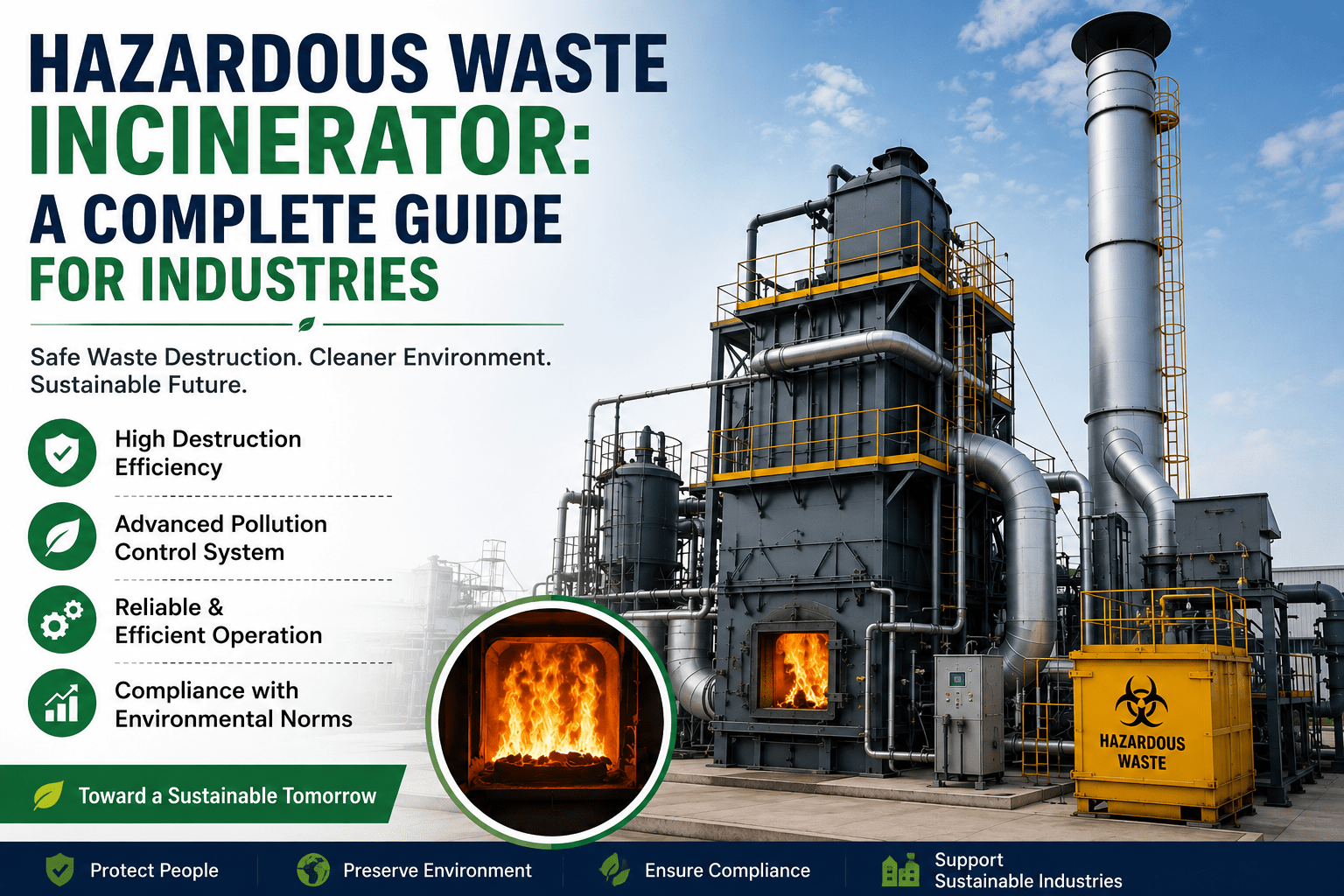
Industries gain several operational and environmental advantages.
Incineration decreases hazardous waste by up to 90%. Therefore, storage and transportation become easier.
High-temperature combustion destroys harmful organic compounds. As a result, contamination risks decrease significantly.
Industries must comply with environmental regulations. Consequently, modern incinerators help achieve pollution control requirements.
Automated waste handling minimizes direct contact with hazardous materials. Therefore, employee safety improves considerably.
Although the initial investment may be higher, long-term disposal costs often decrease.
Many industries depend on hazardous waste incineration.
Each industry benefits from safe and efficient hazardous waste treatment.
Selecting the right system requires careful evaluation.
Different waste categories require different combustion technologies. Therefore, identify your waste characteristics first.
Choose an incinerator that matches your daily waste generation.
Ensure the system meets applicable pollution control regulations.
Modern PLC-controlled systems improve efficiency and reduce manual intervention.
Reliable technical support increases equipment lifespan and minimizes downtime.
Efficient burner systems lower fuel consumption while maintaining excellent combustion performance.
Routine maintenance ensures reliable operation.
Regular inspections improve performance and extend equipment life.
A properly designed hazardous waste incinerator contributes to sustainable industrial operations.
It reduces hazardous waste volume significantly. Additionally, it prevents uncontrolled dumping and environmental contamination. Modern emission control systems also reduce air pollutants. Consequently, industries can achieve better environmental performance while supporting sustainability goals.
A trusted manufacturer provides more than equipment.
Professional suppliers offer:
Therefore, partnering with an experienced manufacturer ensures dependable performance and long-term value.
A Hazardous Waste Incinerator is an essential solution for industries handling dangerous waste. It delivers safe destruction, regulatory compliance, and efficient waste management. Moreover, modern technology improves operational efficiency while reducing environmental impact. By selecting the right system and following proper maintenance practices, industries can achieve reliable, sustainable, and cost-effective hazardous waste disposal.