August 12, 2026
  admin
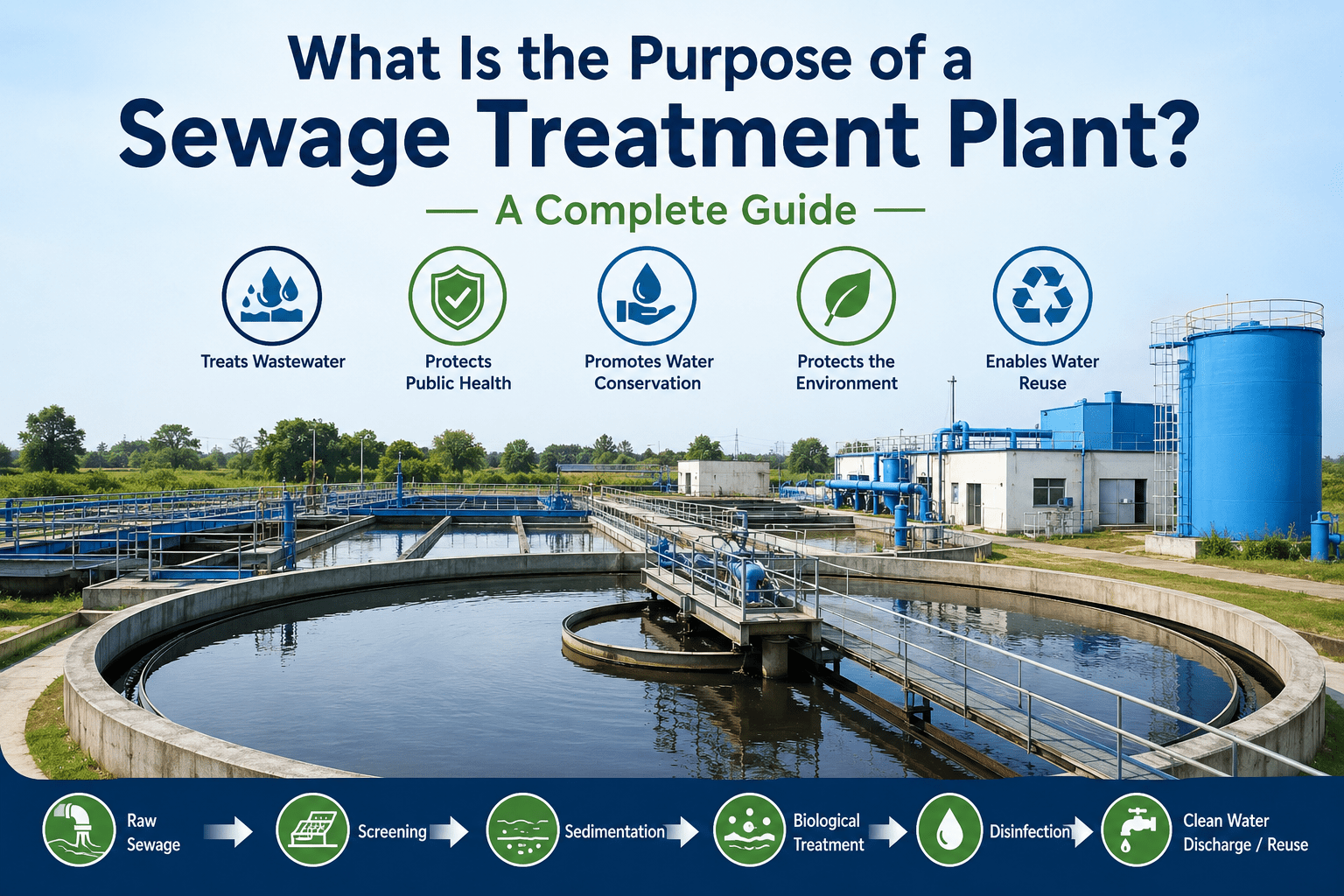
admin A sewage treatment plant treats wastewater before releasing or reusing it. It removes harmful pollutants, solids, organic matter, and pathogens. Therefore, treatment protects public health and surrounding water resources.
Modern sewage treatment plants support homes, commercial buildings, industries, and large communities. Moreover, they help organizations manage wastewater responsibly and efficiently.
A sewage treatment plant is a facility designed to treat domestic wastewater. It uses physical, biological, and chemical treatment processes.
First, the plant removes large debris and suspended solids. Next, biological processes reduce organic pollutants in wastewater. Finally, advanced treatment can improve water quality for reuse.
The treatment process depends on wastewater characteristics and discharge requirements. Therefore, engineers select suitable technologies for each application.
The primary purpose is to convert sewage into treated water. The treatment process reduces contaminants before discharge or reuse.
Furthermore, sewage treatment plants help prevent untreated wastewater from entering rivers and lakes. They also reduce pollution risks around residential and industrial areas.
Key purposes include:
As a result, effective sewage treatment supports cleaner communities and healthier ecosystems.
A sewage treatment plant generally uses several treatment stages. Each stage performs a specific wastewater treatment function.
Preliminary treatment removes large materials from incoming sewage. Screens capture plastics, rags, sticks, and other debris.
Additionally, grit chambers remove sand, gravel, and heavier particles. This stage protects downstream equipment from damage and blockages.
Primary treatment removes settleable solids from wastewater. Large settling tanks allow heavier particles to sink.
Meanwhile, floating materials move toward the surface. Mechanical equipment can then remove these materials from the treatment system.
Secondary treatment uses microorganisms to break down biodegradable organic matter. This biological process significantly improves wastewater quality.
For example, activated sludge systems use aeration tanks and microorganisms. Consequently, they can provide efficient biological treatment for many applications.
Tertiary treatment provides additional purification when higher water quality is required. It can target nutrients, fine solids, and remaining contaminants.
Depending on requirements, systems may include filtration or disinfection. Therefore, tertiary treatment can support stricter discharge standards and water reuse.
Sewage treatment produces sludge during wastewater processing. The plant must therefore manage and treat this sludge properly.
Sludge treatment can reduce moisture, odors, and biological activity. Dewatering systems can also make sludge easier to handle and transport.
Untreated sewage can introduce harmful pollutants into the environment. It can also create unpleasant odors and sanitation problems.
Proper treatment reduces these risks significantly. In addition, it protects surface water and groundwater from contamination.
Sewage treatment also supports sustainable water management. Treated wastewater can potentially serve suitable non-potable applications.
For instance, organizations may reuse treated water for landscaping or other approved purposes. This approach can reduce demand for fresh water supplies.
A properly designed sewage treatment plant offers several operational and environmental benefits.
Treatment reduces pollutants entering natural water bodies. Therefore, it helps protect aquatic ecosystems and surrounding environments.
Effective treatment reduces harmful microorganisms and contaminants. Consequently, it helps create safer sanitation conditions.
Advanced treatment can produce water suitable for selected reuse applications. This option can support water conservation strategies.
Organizations must manage wastewater according to applicable requirements. A suitable treatment system helps achieve required effluent quality.
A treatment plant provides a controlled solution for sewage management. Moreover, it reduces dependence on uncontrolled wastewater disposal methods.
Sewage treatment plants serve many residential and commercial applications. They can also support institutions and industrial facilities.
Common applications include:
However, every application has different wastewater characteristics. Therefore, treatment capacity and technology should match the actual requirement.
Selecting the right plant requires careful technical evaluation. Engineers should consider wastewater flow, pollutant load, available space, and treatment objectives.
Furthermore, operators should evaluate energy consumption and maintenance requirements. Reliable equipment can improve long-term plant performance.
The desired treated water quality also affects technology selection. For example, water reuse may require additional treatment stages.
Therefore, businesses should choose systems based on performance rather than price alone.
The main purpose of a sewage treatment plant is simple and essential. It treats wastewater and reduces pollutants before discharge or reuse.
Moreover, effective treatment protects public health and the environment. It also supports responsible wastewater management and water conservation.
For this reason, sewage treatment plants remain essential for modern communities and organizations. With suitable design and operation, they can provide reliable long-term wastewater treatment.