What Is the Purpose of a Sewage Treatment Plant? A Complete Guide

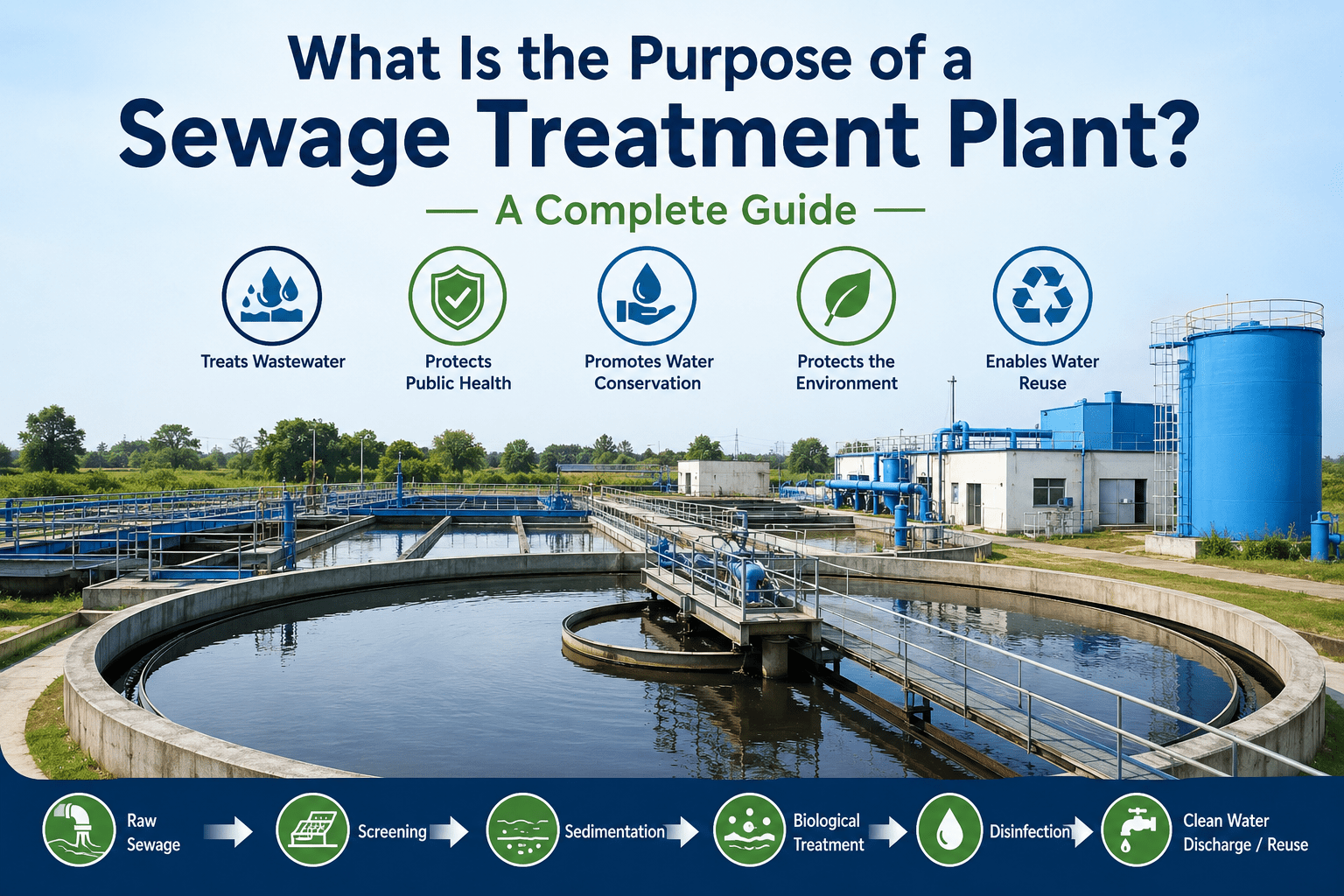
A sewage treatment plant treats wastewater before releasing or reusing it. It removes harmful pollutants, solids, organic matter, and pathogens. Therefore, treatment protects public health and surrounding water resources.

Modern sewage treatment plants support homes, commercial buildings, industries, and large communities. Moreover, they help organizations manage wastewater responsibly and efficiently.

What Is a Sewage Treatment Plant?

A sewage treatment plant is a facility designed to treat domestic wastewater. It uses physical, biological, and chemical treatment processes.

First, the plant removes large debris and suspended solids. Next, biological processes reduce organic pollutants in wastewater. Finally, advanced treatment can improve water quality for reuse.

The treatment process depends on wastewater characteristics and discharge requirements. Therefore, engineers select suitable technologies for each application.

What Is the Purpose of a Sewage Treatment Plant?

The primary purpose is to convert sewage into treated water. The treatment process reduces contaminants before discharge or reuse.

Furthermore, sewage treatment plants help prevent untreated wastewater from entering rivers and lakes. They also reduce pollution risks around residential and industrial areas.

Key purposes include:

  • Removing suspended solids from sewage.
  • Reducing organic pollutants and harmful contaminants.
  • Lowering pathogen levels in treated wastewater.
  • Preventing water pollution and environmental damage.
  • Supporting safe wastewater disposal and reuse.
  • Improving sanitation and public health.
  • Helping meet applicable wastewater discharge requirements.

As a result, effective sewage treatment supports cleaner communities and healthier ecosystems.

How Does a Sewage Treatment Plant Work?

A sewage treatment plant generally uses several treatment stages. Each stage performs a specific wastewater treatment function.

1. Preliminary Treatment

Preliminary treatment removes large materials from incoming sewage. Screens capture plastics, rags, sticks, and other debris.

Additionally, grit chambers remove sand, gravel, and heavier particles. This stage protects downstream equipment from damage and blockages.

2. Primary Treatment

Primary treatment removes settleable solids from wastewater. Large settling tanks allow heavier particles to sink.

Meanwhile, floating materials move toward the surface. Mechanical equipment can then remove these materials from the treatment system.

3. Secondary Treatment

Secondary treatment uses microorganisms to break down biodegradable organic matter. This biological process significantly improves wastewater quality.

For example, activated sludge systems use aeration tanks and microorganisms. Consequently, they can provide efficient biological treatment for many applications.

4. Tertiary Treatment

Tertiary treatment provides additional purification when higher water quality is required. It can target nutrients, fine solids, and remaining contaminants.

Depending on requirements, systems may include filtration or disinfection. Therefore, tertiary treatment can support stricter discharge standards and water reuse.

5. Sludge Treatment

Sewage treatment produces sludge during wastewater processing. The plant must therefore manage and treat this sludge properly.

Sludge treatment can reduce moisture, odors, and biological activity. Dewatering systems can also make sludge easier to handle and transport.

Sewage Treatment Plant Purpose

Why Is Sewage Treatment Important?

Untreated sewage can introduce harmful pollutants into the environment. It can also create unpleasant odors and sanitation problems.

Proper treatment reduces these risks significantly. In addition, it protects surface water and groundwater from contamination.

Sewage treatment also supports sustainable water management. Treated wastewater can potentially serve suitable non-potable applications.

For instance, organizations may reuse treated water for landscaping or other approved purposes. This approach can reduce demand for fresh water supplies.

Benefits of a Sewage Treatment Plant

A properly designed sewage treatment plant offers several operational and environmental benefits.

Environmental Protection

Treatment reduces pollutants entering natural water bodies. Therefore, it helps protect aquatic ecosystems and surrounding environments.

Public Health Protection

Effective treatment reduces harmful microorganisms and contaminants. Consequently, it helps create safer sanitation conditions.

Water Reuse

Advanced treatment can produce water suitable for selected reuse applications. This option can support water conservation strategies.

Regulatory Compliance

Organizations must manage wastewater according to applicable requirements. A suitable treatment system helps achieve required effluent quality.

Better Wastewater Management

A treatment plant provides a controlled solution for sewage management. Moreover, it reduces dependence on uncontrolled wastewater disposal methods.

Where Are Sewage Treatment Plants Used?

Sewage treatment plants serve many residential and commercial applications. They can also support institutions and industrial facilities.

Common applications include:

  • Residential communities
  • Apartment complexes
  • Hotels and resorts
  • Hospitals
  • Schools and universities
  • Commercial buildings
  • Industrial facilities
  • Municipal wastewater systems

However, every application has different wastewater characteristics. Therefore, treatment capacity and technology should match the actual requirement.

Choosing the Right Sewage Treatment Plant

Selecting the right plant requires careful technical evaluation. Engineers should consider wastewater flow, pollutant load, available space, and treatment objectives.

Furthermore, operators should evaluate energy consumption and maintenance requirements. Reliable equipment can improve long-term plant performance.

The desired treated water quality also affects technology selection. For example, water reuse may require additional treatment stages.

Therefore, businesses should choose systems based on performance rather than price alone.

Conclusion

The main purpose of a sewage treatment plant is simple and essential. It treats wastewater and reduces pollutants before discharge or reuse.

Moreover, effective treatment protects public health and the environment. It also supports responsible wastewater management and water conservation.

For this reason, sewage treatment plants remain essential for modern communities and organizations. With suitable design and operation, they can provide reliable long-term wastewater treatment.

Hazardous Waste Incinerator: A Complete Guide for Industries

Industries generate hazardous waste every day. Safe disposal is essential for protecting people, equipment, and the environment. Therefore, a Hazardous Waste Incinerator has become one of the most reliable solutions for handling dangerous industrial waste.

Modern hazardous waste incinerators destroy harmful materials at high temperatures. As a result, they significantly reduce waste volume while minimizing environmental impact. Industries such as pharmaceuticals, chemicals, petrochemicals, manufacturing, and healthcare rely on these systems to meet strict environmental standards.

What Is a Hazardous Waste Incinerator?

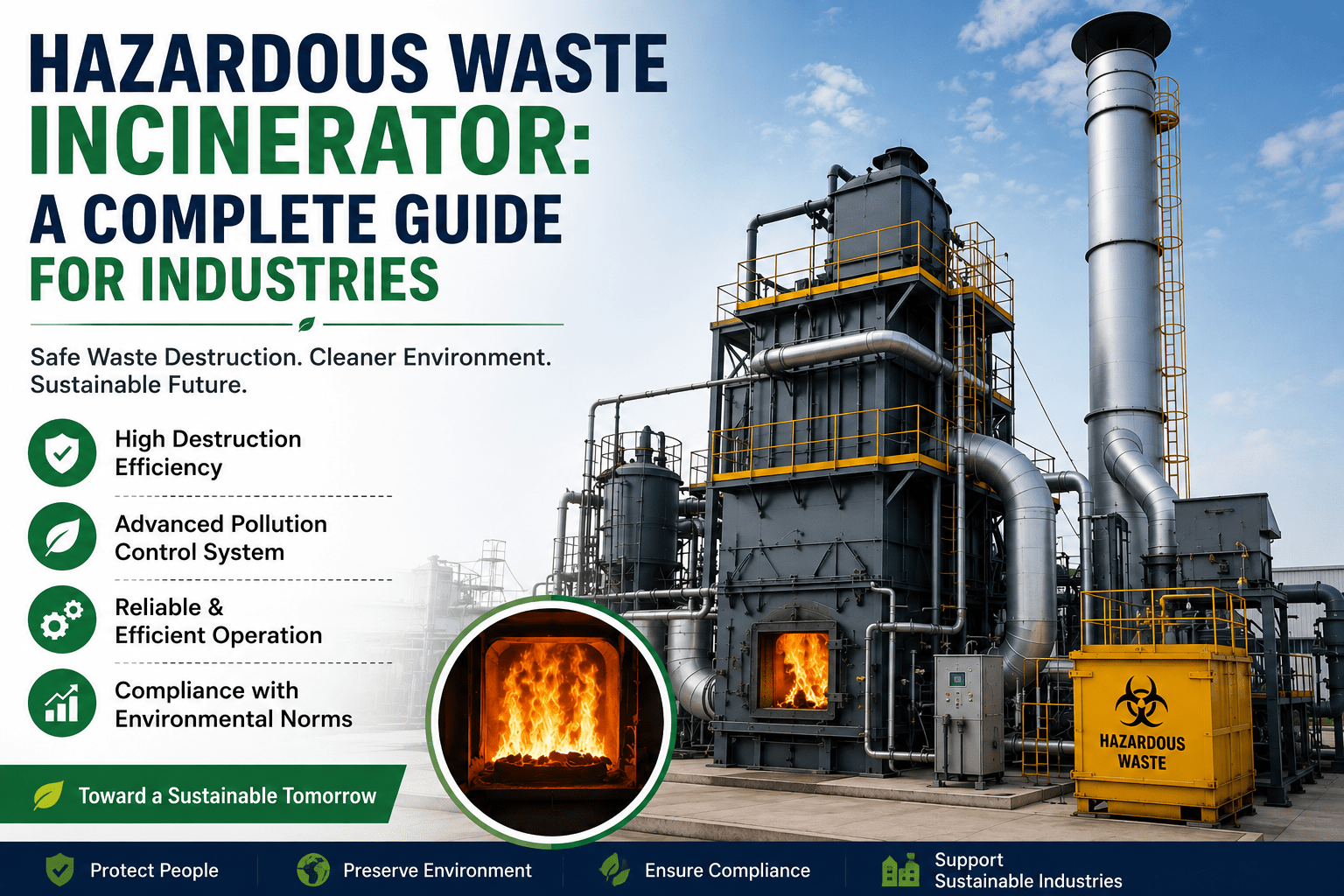
A Hazardous Waste Incinerator is a high-temperature thermal treatment system. It safely burns hazardous waste under controlled conditions. Consequently, toxic substances are destroyed before disposal.

These systems process various waste materials, including:

  • Chemical waste
  • Pharmaceutical waste
  • Toxic sludge
  • Paint residue
  • Contaminated packaging
  • Industrial solvents
  • Laboratory waste
  • Hazardous solid and liquid waste

Furthermore, advanced air pollution control systems help reduce emissions and improve operational safety.

How Does a Hazardous Waste Incinerator Work?

A hazardous waste incinerator follows a systematic process for complete waste destruction.

Waste Feeding

Hazardous waste enters the combustion chamber through an automated feeding system. This process reduces operator exposure and improves workplace safety.

Primary Combustion

The primary chamber burns waste at controlled temperatures. During this stage, combustible materials begin to decompose.

Secondary Combustion

The gases then move into the secondary chamber. Here, extremely high temperatures destroy remaining harmful compounds.

Emission Control

Next, flue gases pass through advanced pollution control equipment. These systems remove dust, acidic gases, and fine particles before release.

Ash Collection

Finally, the remaining ash is collected for safe handling and disposal according to environmental regulations.

Key Features of a Hazardous Waste Incinerator

Modern industrial incinerators offer several advanced features.

  • High-temperature combustion technology
  • Dual combustion chamber design
  • Fully automatic operation
  • PLC-based control system
  • Energy-efficient burners
  • Continuous emission control
  • Low maintenance requirements
  • Durable refractory lining
  • High destruction efficiency
  • Environment-friendly operation

Moreover, these features improve safety, efficiency, and long-term performance.

Hazardous Waste Incinerator


Benefits of Using a Hazardous Waste Incinerator

Industries gain several operational and environmental advantages.

Reduces Waste Volume

Incineration decreases hazardous waste by up to 90%. Therefore, storage and transportation become easier.

Improves Environmental Safety

High-temperature combustion destroys harmful organic compounds. As a result, contamination risks decrease significantly.

Supports Regulatory Compliance

Industries must comply with environmental regulations. Consequently, modern incinerators help achieve pollution control requirements.

Enhances Workplace Safety

Automated waste handling minimizes direct contact with hazardous materials. Therefore, employee safety improves considerably.

Cost-Effective Waste Management

Although the initial investment may be higher, long-term disposal costs often decrease.

Industries That Use Hazardous Waste Incinerators

Many industries depend on hazardous waste incineration.

  • Pharmaceutical manufacturing
  • Chemical processing plants
  • Petrochemical industries
  • Paint manufacturing
  • Research laboratories
  • Healthcare facilities
  • Automotive industries
  • Textile manufacturing
  • Metal processing industries
  • Oil and gas sectors

Each industry benefits from safe and efficient hazardous waste treatment.

Important Factors When Choosing a Hazardous Waste Incinerator

Selecting the right system requires careful evaluation.

Waste Type

Different waste categories require different combustion technologies. Therefore, identify your waste characteristics first.

Capacity Requirements

Choose an incinerator that matches your daily waste generation.

Emission Standards

Ensure the system meets applicable pollution control regulations.

Automation Level

Modern PLC-controlled systems improve efficiency and reduce manual intervention.

Maintenance Support

Reliable technical support increases equipment lifespan and minimizes downtime.

Energy Efficiency

Efficient burner systems lower fuel consumption while maintaining excellent combustion performance.

Maintenance Best Practices

Routine maintenance ensures reliable operation.

  • Inspect burners regularly.
  • Clean pollution control equipment.
  • Monitor combustion temperatures.
  • Replace worn refractory materials.
  • Check safety systems frequently.
  • Calibrate control instruments.
  • Inspect feeding mechanisms.
  • Maintain detailed service records.

Regular inspections improve performance and extend equipment life.

Environmental Benefits

A properly designed hazardous waste incinerator contributes to sustainable industrial operations.

It reduces hazardous waste volume significantly. Additionally, it prevents uncontrolled dumping and environmental contamination. Modern emission control systems also reduce air pollutants. Consequently, industries can achieve better environmental performance while supporting sustainability goals.

Why Choose a Reliable Hazardous Waste Incinerator Manufacturer?

A trusted manufacturer provides more than equipment.

Professional suppliers offer:

  • Customized system design
  • Quality manufacturing
  • Technical consultation
  • Installation support
  • Operator training
  • Preventive maintenance
  • Spare parts availability
  • After-sales service

Therefore, partnering with an experienced manufacturer ensures dependable performance and long-term value.

Conclusion

A Hazardous Waste Incinerator is an essential solution for industries handling dangerous waste. It delivers safe destruction, regulatory compliance, and efficient waste management. Moreover, modern technology improves operational efficiency while reducing environmental impact. By selecting the right system and following proper maintenance practices, industries can achieve reliable, sustainable, and cost-effective hazardous waste disposal.

Industrial Waste Water Treatment: Benefits and Solutions

Industrial Waste Water Treatment is essential for manufacturers who want to protect resources, stay compliant, and cut operating costs. From textiles and chemicals to food processing and engineering units, clean discharge and water reuse are now strategic must-haves. If you are planning upgrades or a new effluent treatment plant, this guide explains what matters, how to improve performance, and where to start. Explore more options here: Wastewater Treatment Services.

What Is Industrial Waste Water Treatment and Why It Matters

Industrial Waste Water Treatment is the engineered process of removing contaminants from process water and effluent before discharge or reuse. It combines physical (screening, oil–water separation), chemical (coagulation, pH correction), and biological methods (aeration, MBBR, MBR) to reduce BOD, COD, TSS, color, and specific pollutants like heavy metals. Advanced polishing steps such as ultrafiltration (UF), reverse osmosis (RO), and zero liquid discharge (ZLD) help achieve near-closed-loop water recycling.

Why it matters: regulations from CPCB/GPCB are tightening; water costs and scarcity are rising; and customers increasingly expect responsible operations. Effective treatment safeguards equipment, prevents downtime, and unlocks reuse. As a pollution control equipment manufacturer in Vatva, Ahmedabad, Gopinath Enterprise helps industries move beyond basic compliance to high-efficiency, reliable performance.

Key Benefits of Industrial Waste Water Treatment

  • Regulatory compliance and risk reduction: Meet CPCB/GPCB norms consistently, avoid penalties, and reduce environmental liabilities with auditable, well-instrumented ETPs.
  • Cost savings via reuse: Reduce freshwater purchases and sewer surcharges by recycling permeate from RO/UF. Reuse for cooling towers, boilers (with polishing), or process needs.
  • Operational reliability: Proper equalization, automation (PLC/SCADA), and optimized aeration stabilize flows and loads, reducing shock events and unplanned stoppages.
  • Energy and chemical efficiency: Fine-tuned dosing, VFD-driven blowers, and correct media selection lower kWh/m³ and kg chemical/m³ without compromising removal efficiency.
  • Brand and stakeholder trust: Demonstrate ESG leadership and win customer confidence with clear water-quality KPIs, sustainability reporting, and certified systems.
  • Footprint optimization: Compact technologies like MBR and DAF deliver high performance where space is limited—ideal for urban or expansion-constrained facilities.

How Industrial Waste Water Treatment Solves Common Problems

From fluctuating influent quality to sludge handling headaches, the right design and equipment selection address root causes. Gopinath Enterprise engineers systems that integrate screening, equalization, primary clarification, biological oxidation, tertiary filtration, and sludge dewatering for end-to-end reliability.

  • Variable loads and shock toxicity: Flow equalization with pH buffering and real-time monitoring prevents biological upsets and protects downstream units.
  • High TSS and oil: Dissolved air flotation (DAF) and oil–water separators remove fats, oils, and suspended solids before biological stages, improving stability.
  • High salinity or color: Advanced oxidation and RO handle color/TS issues; antiscalants and staged membranes maintain recovery while controlling fouling.
  • Sludge volume and handling: Efficient thickening and dewatering (belt press, screw press) slash disposal costs and improve overall O&M hygiene.

Practical Tips to Improve Your Waste Water Treatment

  • Audit your influent: Test COD, BOD, TSS, oil & grease, TDS, pH, and metals across shifts. Build a load profile to guide dosing and equipment sizing.
  • Stabilize upstream: Segregate high-strength streams, install screens and equalization tanks, and implement pH control before biological treatment.
  • Right-size aeration: Use VFD blowers and DO sensors to match oxygen supply to demand; this cuts energy and protects microbes from over/under-aeration.
  • Optimize chemicals: Jar tests tune coagulants/flocculants. Track sludge yield to avoid overdosing. Standardize SOPs for shift-to-shift consistency.
  • Automate critical points: Simple PLC/SCADA, level sensors, and interlocks reduce human error. Log alarms and trends for proactive maintenance.
  • Maintain membranes and media: Follow CIP schedules for UF/RO; backwash filters as specified. Keep spares for pumps, blowers, and probes to minimize downtime.
  • Plan for reuse early: If recycling, design for RO/UF, remineralization, and storage hygiene from day one. Learn more here: [LINK: Effluent Treatment Plants (ETP)].

Why Choose Gopinath Enterprise

Based in Vatva, Ahmedabad, Gopinath Enterprise is a professional environmental engineering partner and pollution control equipment manufacturer delivering turnkey ETP/STP and water recycling systems. We combine process design, quality fabrication, and on-ground commissioning to achieve predictable, compliant outcomes—backed by responsive after-sales support.

  • Tailored process design: From textile dyeing to pharma and chemicals, we select the right mix—DAF, MBBR/MBR, UF/RO, and ZLD—based on your data.
  • Energy-smart engineering: Blower optimization, fine-bubble aeration, and efficient pumps lower lifecycle costs and improve kWh/m³.
  • Robust fabrication and QA: Corrosion-resistant tanks, skids, and piping built to spec, with FAT/SAT protocols and documented performance testing.
  • Automation and analytics: PLC/SCADA, instrumentation, and remote dashboards ensure clarity on KPIs like COD, MLSS, permeate conductivity, and recovery.
  • End-to-end service: Design, manufacturing, installation, operator training, and AMC—plus fast support. Explore our story: About Gopinath Enterprise.

Take the Next Step

If you are planning an upgrade, facing non-compliance, or exploring reuse, our team can help you benchmark, pilot, and deploy the right solution. Gopinath Enterprise offers plant audits, performance guarantees, and transparent ROI models so you can invest with confidence. Start with a no-obligation assessment and a practical roadmap for improvements. Reach out now: Contact Gopinath Enterprise. For reliable results and long-term savings, partner with Gopinath Enterprise—and make Industrial Waste Water Treatment a competitive advantage.

Introducing Roles & Permissions in Vectura

Lorem ipsum dolor sit amet, consectetur adipiscing elit. Maecenas at magna ullamcorper, efficitur augue vitae, bibendum neque. Integer finibus consequat laoreet. Quisque luctus dapibus tortor, suscipit vehicula nunc consectetur in. Cras a tortor ultricies, finibus neque sed, fringilla enim. Praesent elementum sapien magna, a blandit nisl pharetra id. Class aptent taciti sociosqu ad litora torquent per conubia nostra, per inceptos himenaeos. Phasellus pulvinar a nibh at mattis. Integer vel mollis dui, nec vulputate augue. Quisque justo lorem, eleifend quis libero vitae, cursus suscipit purus. Quisque diam odio, fringilla at dapibus ac, scelerisque a ex. Nulla facilisi. Fusce blandit sollicitudin consectetur. Proin nibh neque, varius sed dignissim in, suscipit rhoncus nisl. Nullam in posuere nisl. Vestibulum viverra risus quis feugiat lacinia. Nam auctor ipsum vel hendrerit rhoncus.

Vivamus ut tortor sit amet diam semper tristique sit amet nec metus. Mauris vitae velit lacus. Vivamus pellentesque, augue ac consequat finibus, dui lacus elementum est, feugiat bibendum arcu eros non augue. Nam nec ligula eget mi suscipit fermentum. Integer commodo sem mi, ac sollicitudin nulla volutpat nec. Praesent viverra aliquet vulputate. Nam pellentesque, tortor ac bibendum placerat, velit justo porttitor turpis, in cursus nulla neque vitae leo. Vivamus lorem urna, posuere quis blandit vel, posuere eget metus. Nullam eu orci ultricies, venenatis risus quis, blandit turpis. Donec sit amet cursus lectus, ultricies tincidunt metus. Nullam id libero sagittis, congue felis sit amet, aliquet risus. Vestibulum ante ipsum primis in faucibus orci luctus et ultrices posuere cubilia curae;

Vestibulum finibus metus diam. Integer augue orci, aliquet et vehicula sit amet, placerat eget sapien. Quisque eget quam vel mauris laoreet pharetra at eget est. Morbi sit amet arcu a massa pretium lobortis a sed augue. Quisque quis mollis dui. Morbi dapibus ligula quis leo laoreet, nec elementum nisi vestibulum. Vestibulum gravida consequat odio tincidunt varius. Vestibulum ante ipsum primis in faucibus orci luctus et ultrices posuere cubilia curae; In at risus luctus, pulvinar sapien gravida, faucibus augue. Quisque et eros venenatis, bibendum quam id, sagittis mi. Quisque in ornare justo, a luctus ligula. Duis nec lorem ullamcorper, congue ipsum a, viverra ligula. Praesent vel dui eget ligula condimentum vulputate. Donec ligula massa, feugiat vitae lorem sit amet, ultrices luctus mi. Vestibulum tristique nulla nec mi vehicula, non accumsan tortor cursus. Mauris sed felis sit amet ante commodo interdum.

Nunc laoreet velit in purus egestas, ac tincidunt felis dignissim. Ut imperdiet enim id nisi cursus, non semper purus venenatis. Quisque lobortis interdum ornare. Mauris scelerisque tristique justo a efficitur. Nulla ultrices risus at est imperdiet, eu viverra risus consectetur. Duis faucibus dolor non erat tristique condimentum. Nulla fringilla varius sem, aliquet sollicitudin ligula auctor pellentesque. Vivamus iaculis ante quis vulputate aliquam. In hendrerit tincidunt augue, non imperdiet justo imperdiet sit amet. Morbi gravida sagittis vestibulum.

Mauris laoreet libero libero, vel porttitor nibh tincidunt a. Aliquam eu sagittis nisi. Donec ultricies justo consequat leo congue dignissim. Aenean feugiat diam a dolor scelerisque, sed pulvinar risus laoreet. Quisque ultricies metus eget ultricies condimentum. Lorem ipsum dolor sit amet, consectetur adipiscing elit. Pellentesque facilisis ante velit, eget imperdiet odio aliquet vitae. Vestibulum ante ipsum primis in faucibus orci luctus et ultrices posuere cubilia curae;